If you sit Brazilian public-sector exams (concursos públicos), you know the ritual: refreshing the exam board's page for the fifth time to see whether the edital (the official exam notice) is out. Reloading the agency's site waiting for the convocação (call-up list). Scrolling the Diário Oficial (official gazette) hunting for your own name. It's manual, anxious work — and easy to miss something right when the deadline is short and the information is worth a job.
The good news: you can track a concurso edital automatically and be alerted as soon as the page changes — a notice published, a schedule amendment (retificação), a call-up, an answer key, or an appointment (nomeação). The real question isn't "is there a tool?" — it's which tool for which job, because they do different things and none does everything.
This guide is an honest comparison: concurso portals (PCI Concursos, Alô Concursos, Alerta Concurso), official-gazette monitors (Diário Monitor, e-Diário, FuiNomeado), Google Alerts, manual checking, and BriefPanel, side by side — so you know exactly which fits your moment, and where each one falls short.
Want to watch your exam's page without refreshing all day? Start free with BriefPanel → — no card, with an AI summary of what changed.
First: what you actually want to track
"Following a concurso" isn't one thing. It's at least five moments, each with a different source of truth (the page where it appears first):
| Moment | What changes | Where it appears first (the source of truth) |
|---|---|---|
| Edital published | The opening notice drops | The exam board's notices page (Cebraspe, FGV, FCC, Vunesp…) and the agency's page |
| Retificação (amendment) | Exam date, seats, requirements change | The edital itself and the schedule on the board's page |
| Convocação (call-up) | List of candidates called for the exam, a course, or the post | The agency's call-up page and the Diário Oficial |
| Answer key / results | The key or the pass list is out | The board's results page |
| Nomeação (appointment) | Your name is appointed | The Diário Oficial (federal DOU or a state gazette) |
Notice the pattern: sometimes the source is a catalog of exams (to discover what exists), and sometimes it's a specific page you already know (your board's, your agency's, your exam's). That distinction decides which tool works.
Two different jobs (and why it changes everything)
The biggest confusion is mixing two jobs that look alike but aren't:
1. Discovering new exams. "Which concursos opened in my field/state?" Here you want a catalog that aggregates notices from everywhere and pings you when a new one matches your profile. That's the job of concurso portals (PCI Concursos, Alô Concursos, Alerta Concurso). They watch their own curated base.
2. Watching the page of an exam you already follow. "Is the amendment out? My call-up list? My name in the appointments?" Here you don't want a catalog — you want a specific page (the board's, the agency's, the gazette's) watched, and someone to tell you exactly what changed on it. That's the job of a page monitor.
Almost everyone needs both. You use a portal to find the exam, and a page monitor to not miss anything once it's on your radar. The costly mistake is using only the catalog and assuming it will flag an amendment buried in the edital PDF, or a call-up posted only on the agency's site — that's not what it's built for.
The methods and services, compared
Here's the honest landscape. Prices are a July 2026 snapshot and change often — always confirm on the vendor's page.
| Tool | Watches what | Best for | Alert | Price (Jul 2026) |
|---|---|---|---|---|
| PCI Concursos | Own curated exam base | Discovering exams by profile | Email + app | Free |
| Alô Concursos | Curated base (by role/tag and agency) | Discovery by role or agency | Free | |
| Alerta Concurso (app) | Curated base of openings | Discovery on mobile | Push (Android/iOS) | Free |
| Alerta Editais | Curated base (universities SP/RJ/MT) | Academic notices & scholarships | R$49–200/mo | |
| Diário Monitor | DOU only, by keyword | Finding your name in the federal gazette | R$39–249/mo | |
| e-Diário | DOU + state gazettes, by name | Appointment in any state | On request | |
| FuiNomeado | Official gazette, by your name | Confirming your appointment | Email + WhatsApp | Free / R$2 mo |
| Google Alerts | Newly indexed pages by keyword | Broad, informal tracking | Free | |
| Generic monitors (Visualping, Distill…) | Any page, raw diff | Technical use, any URL | Email/app | Free–paid |
| BriefPanel | Any page + AI summary of what changed | Watching your exam's exact page | Email + push | 20 free, then pay-as-you-go |
Now, category by category — what each does well and where it falls short.
1. Concurso portals — unbeatable for discovery (not for watching a page)
PCI Concursos, Alô Concursos, and the Alerta Concurso app are every candidate's front door. You set your profile (field, role, state, education level) and get pinged when a new exam enters their base.
- PCI Concursos is the country's largest portal: email alerts by profile, an exam calendar, and app notifications — free.
- Alô Concursos lets you create two free alert types: by tag (role, exam, or location) and by public agency (pings you when that agency opens something new).
- Alerta Concurso is a free Android/iOS app that notifies new openings by area and region — handy on mobile, though its filters are basic (no exam-location filter, for instance).
- Alerta Editais focuses on the academic world (university exams, scholarships, entrance exams, medical residency), today concentrated in SP, RJ, and MT, with paid plans (Plus R$49/mo, Premium R$200/mo).
Where they shine: discovery. If the question is "what exams exist for my profile?", a portal is the right tool — and PCI does it free, with the widest coverage.
Where they fall short: they watch their curated base, not your exam's page. That brings three real limits:
- They depend on an editorial team cataloging it. If a notice, an amendment, or a call-up is slow to be listed (or never enters the base because it's a small agency), you aren't alerted.
- They flag "new exam", not "what changed". A retificação that shifts the exam date inside an already-published edital, or a convocação posted only on the agency's page, often won't trigger a "new exam" alert.
- They don't track appointments. Confirmation of your nomeação lives in the Diário Oficial, not the portal's catalog.
Honest verdict: use a portal (PCI, free) to find exams. Just don't rely on it to catch every amendment and call-up on the page you already follow — that's not its job.
2. Official-gazette monitors — perfect for the appointment by name
Once you've passed, the game becomes "did my name come out?". Enter Diário Oficial monitors, which scan the editions for a name or keyword and alert you when it appears.
- Diário Monitor — watches the DOU only (federal), by keyword, with accent-insensitive search. Plans from R$39/mo (3 keywords) to R$249/mo (30 keywords), with a 7-day no-card trial. Runs two cycles a day so no edition is missed.
- e-Diário — covers the DOU and state gazettes, by name/term, and emails you the exact page where the term appeared. Price on request.
- FuiNomeado — does one thing very well: searches your name in the Diário Oficial daily to flag an appointment. It has a free email tier and a R$2/mo (or R$24/year) Premium that adds WhatsApp alerts.
Where they shine: searching the gazette by name. For "was I appointed?", a service like FuiNomeado solves it for almost nothing — and e-Diário covers the states, not just the federal gazette.
Where they fall short: the scope is the Diário Oficial and nothing else. They don't watch the agency's call-up page, the board's notices page, or the exam schedule. And because they rely on name/keyword matching, they can slip when the information comes in an attached list, a case number, or a notice that cites only the role — not your name.
Honest verdict: to confirm an appointment by name in the gazette, a dedicated monitor (FuiNomeado is nearly free) is the most direct pick. For everything that happens outside the gazette — the board, the agency, the schedule — you need something else.
3. Google Alerts — free, broad, and noisy
Google Alerts is the reflex option: register "concurso INSS 2026" and get emails when Google indexes new pages with that term.
Where it shines: it's free, covers the whole web, and works for informal tracking of news and mentions.
Where it falls short (and it's serious for exams): it keys on newly indexed pages, not on changes inside a page you follow. An amendment published within the existing edital on the board's page usually won't trigger an alert. Add indexing lag, the noise of news sites repeating the same headline, and the fact that it doesn't tell you what changed — and Google Alerts becomes more a source of anxiety than of signal. Good for broad discovery; poor for watching the source of truth.
4. Generic change monitors — watch any page, but hand you a raw diff
Tools like Visualping, Distill.io, and changedetection.io monitor any URL and alert you when the page changes. That solves the core problem portals don't: following the specific page of your board or agency.
Where they shine: flexibility. Any public page can be monitored, at a decent frequency.
Where they fall short: what arrives is a raw diff (red/green fragments) or a screenshot — you still have to read and interpret what it means. Several require configuring CSS/XPath selectors (technical), and those with AI summaries usually ask for your own API key. In short: they solve "any page" but throw the work of understanding the change back onto you. (We compare the free plans of these tools in the guide to the best free website change-monitoring tools.)
5. BriefPanel — watches any page and tells you what changed, in plain language
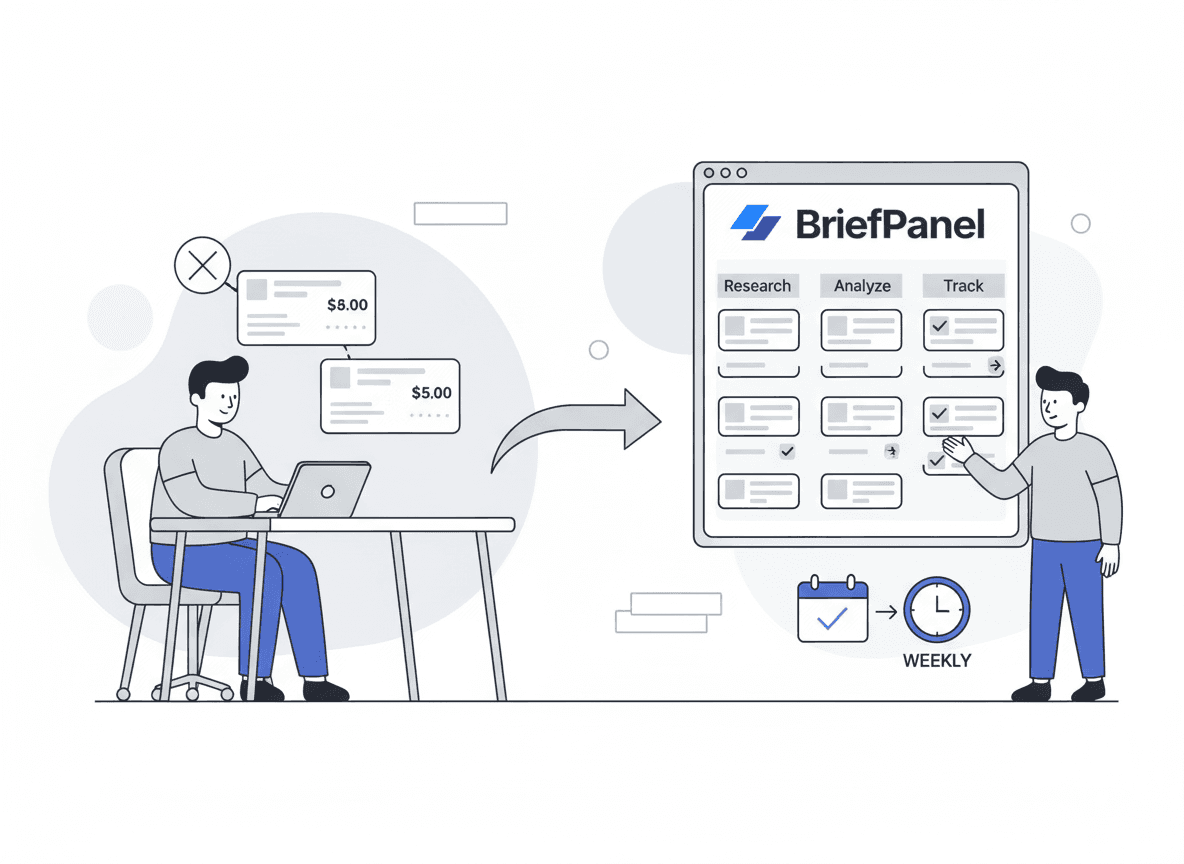
BriefPanel targets exactly the gap between "follow the right page" and "understand the change without effort." You paste the link of the page that matters — your board's notices page (Cebraspe, FGV, FCC…), the agency's call-up page, your exam's page, or the Diário Oficial — and BriefPanel:
- watches the page 24/7, at the frequency you choose;
- detects the change by comparing it to the previous version — even small ones;
- writes an AI summary of what was added or altered, in plain language ("Amendment out: the exam date moved from Aug 10 to Aug 24"), not a raw diff;
- alerts by email and push as soon as it detects the change, with a custom prompt to focus only on what matters (e.g., "flag notices, schedule amendments, and call-ups; ignore menu, footer, and unrelated news").
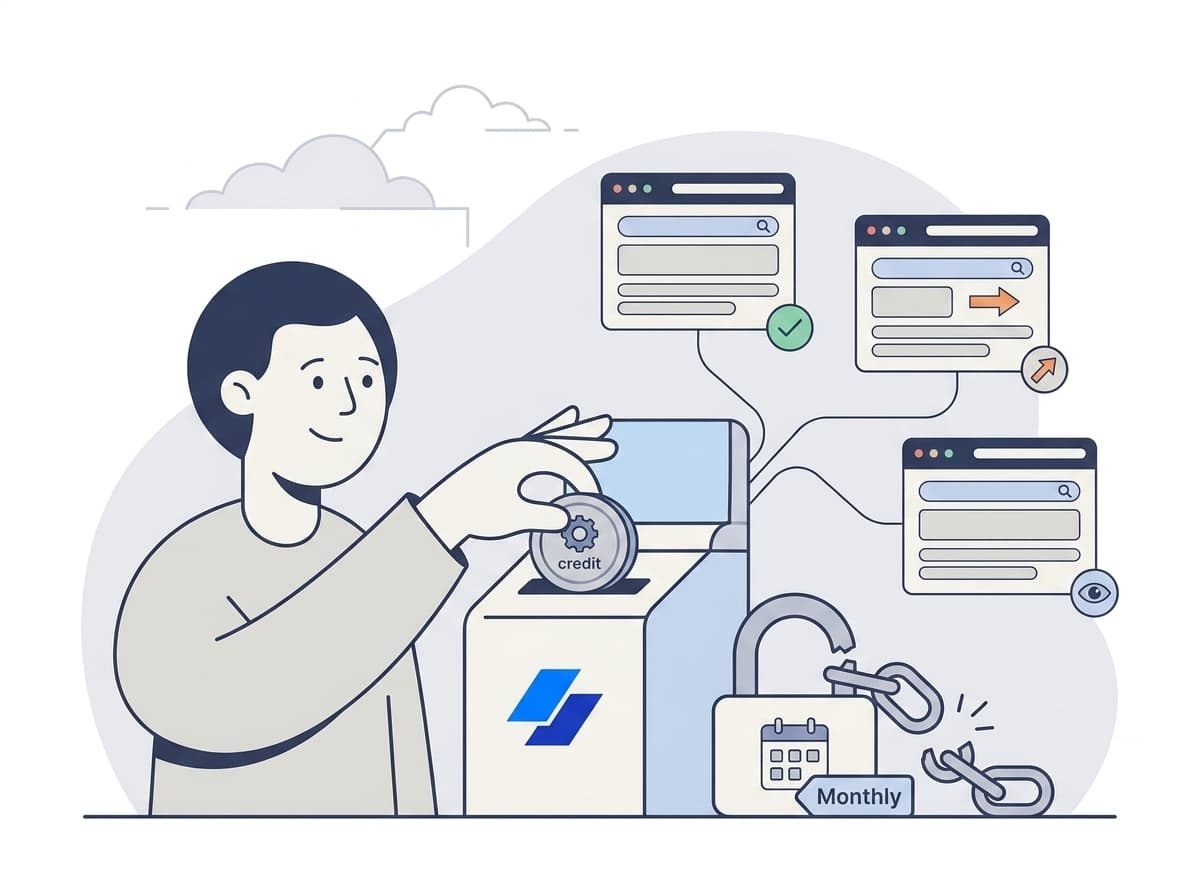
Where it shines: it's the only one on this list that combines the three things a candidate wants at once — any page (not a curated base), detection of any change (not just "new exam"), and a plain-language summary (not a diff to decode). And it isn't a subscription: you get 20 free checks on verifying your email (no card), then pay-as-you-go (about US$10 per 1,000 checks, ~US$0.01 each), with credits that don't expire.
Where it falls short — worth saying: BriefPanel isn't a catalog. It won't surface exams you don't already know about — for discovery, a portal like PCI is better. And it monitors changes on the page where the notice/call-up is published or listed; if the information is locked inside an unchanged PDF, it follows the page pointing to that PDF, not the file's interior. In other words: it's best for watching the source of truth you've chosen, not for replacing the discovery step.
Honest verdict: to be the first to know your exam's page changed — and to understand what changed without reading a diff — BriefPanel is the most complete. It pairs well with a portal (for discovery) and even with FuiNomeado (for the appointment by name).
Which to use for each moment
Match the tool to the moment instead of trying to cover everything with one:
| Your moment | Best pick |
|---|---|
| Discover which exams opened for my profile | PCI Concursos (free) / Alô Concursos |
| Be alerted when the edital from my board drops | BriefPanel (watches the board's notices page) |
| Catch a retificação to date/seats inside the edital | BriefPanel (detects the change on the page) |
| Follow the convocação on the agency's site | BriefPanel (watches the call-up page) |
| Learn of my nomeação by name in the gazette | FuiNomeado (nearly free) / e-Diário (states) |
| Broad, informal news tracking | Google Alerts |
| Monitor any URL, no summary, and I'll interpret | Visualping / Distill.io |
The rule of thumb: a portal to find, BriefPanel to watch the page, a gazette monitor for the appointment by name. Many candidates use all three — each for what it does best.
How to track your exam with BriefPanel in 5 minutes
- Pick the pages that are your exam's source of truth:
- the board's notices page (Cebraspe, FGV, FCC, Vunesp, Cesgranrio…);
- the agency's exams/call-ups page (city hall, court, ministry…);
- the Diário Oficial page (federal DOU or your state's), if you follow it there.
- Paste each link into BriefPanel. No selector, no technical setup.
- Set the frequency: hourly near hot dates (edital eve, call-up window), daily for general tracking.
- Add a prompt to focus the summary (see below).
- Get the briefing by email or push when something changes — and read, in one sentence, what happened.
Ready-to-paste prompt
"Summarize only changes relevant to candidates: publication of a notice (edital), schedule amendments (exam, registration, results dates), changes to seats or requirements, call-ups, answer keys, and results. State exactly what changed (from/to). Ignore menu, footer, banners, and news unrelated to the exam."
That avoids alert fatigue and turns each change into an alert worth opening.
Build your exam radar now. Start free → — 20 free checks on verifying your email, AI summary included. More on the BriefPanel-for-candidates page.
Frequently asked questions
How can I be alerted as soon as my exam's edital is published?
Monitor the board's notices page and the agency's page with a page monitor. BriefPanel watches those pages 24/7 and sends an AI summary as soon as the notice appears on the page — no refreshing. Portals like PCI also alert you, but they depend on cataloging the notice in their base first; watching the board's page directly is usually faster for your specific exam.
Can I monitor the Diário Oficial by my name?
Yes. Services like FuiNomeado (free, WhatsApp for R$2/mo), e-Diário (DOU + states), and Diário Monitor (DOU only) search your name or a keyword in the editions and alert you by email. It's the most direct route for the appointment. If you also want to follow the agency's call-up page (which isn't in the gazette), a page monitor like BriefPanel complements it.
What's the difference between BriefPanel and PCI Concursos or Alô Concursos?
The portals watch their curated base and are for discovering new exams by profile. BriefPanel watches the specific page you choose (your board's, your agency's, your exam's) and tells you what changed on it — including amendments and call-ups a catalog might not flag. They're complementary: a portal to find, BriefPanel to not miss anything afterward.
Is it allowed to monitor these pages?
Yes — you're following public pages, the same information anyone sees when opening the site. Respect each site's terms and a reasonable frequency, and focus on the pages relevant to your exam rather than mass-collecting everything.
Do I have to pay to follow an exam?
It depends on the job. Discovery on PCI Concursos and a basic appointment watch on FuiNomeado are free. To watch your exam's page with an AI summary, BriefPanel gives 20 free checks on verifying your email (no card) and is then pay-as-you-go, no monthly fee — you top up only when you run out, and credits don't expire. See our guide on monitoring website changes without a subscription.
How often do exam pages change?
It depends on the phase. Away from key dates, a daily check catches almost everything. On the eve of a notice, during a call-up window, or near results, hourly is worth it — that's when a fast alert saves a deadline.
Will BriefPanel tell me about exams I don't know about yet?
No — for that, use a portal (PCI, Alô Concursos). BriefPanel is built to watch the pages you already follow, not to catalog new exams. Use both together: the portal discovers, BriefPanel watches.
Conclusion
You can absolutely track concurso notices and results automatically in 2026 — the key is the right tool for each moment. To discover exams, a curated portal like PCI (free) is unbeatable. For the appointment by name, a gazette monitor like FuiNomeado solves it for almost nothing. And to be the first to know your exam's page changed — the notice that dropped, the date amendment, your call-up list — and to understand what changed without decoding a diff, BriefPanel is the most complete: any page, an AI summary in plain language, no subscription.
Stop refreshing the board's page on hope. Set it up once and let the briefing come to you.
Start tracking your exam free → Get a summary of what changed
Sources
- PCI Concursos
- Alô Concursos — alerts info
- Alerta Concurso (app) — TechTudo
- Alerta Editais
- Diário Monitor — how to monitor the DOU
- e-Diário — search a name in the gazette
- FuiNomeado
- Imprensa Nacional — Diário Oficial da União (in.gov.br)