Product managers precisam saber o que concorrentes lançaram, o que clientes estão pedindo e para onde o mercado está indo — sem gastar metade da semana em pesquisa manual.
Se você já manteve uma planilha de “concorrência” que ficou desatualizada em duas semanas, você conhece o problema:
- mudanças importantes acontecem em silêncio (preços, docs, comparativos de features)
- o sinal se perde no ruído (layout, navegação, widgets)
- e você só descobre o movimento depois que Vendas ou Suporte escuta primeiro
Neste guia, você vai ver as melhores formas de fazer inteligência competitiva para product managers, as vantagens e limites de cada abordagem, e um fluxo que transforma mudanças em páginas em campos tipados, cada um com o valor anterior e o atual, usando o BriefPanel.
O que PMs deveriam monitorar (as páginas que revelam estratégia)
Nem toda página de concorrente tem o mesmo valor. Comece pelas páginas que mudam quando a estratégia muda:
- páginas de preço e comparação de planos
- changelog e release notes
- documentação e páginas de API
- homepage e posicionamento
- diretórios de integrações
- termos, limites de uso e políticas
- páginas de vagas (sinais de prioridade e crescimento)
Inteligência competitiva não é “monitorar tudo”. É monitorar as 10–30 URLs certas e saber o que mudou.
Soluções comuns (e os trade-offs)
1) Planilhas + lembretes no calendário
Prós:
- simples
- sem ferramenta
Contras:
- não escala
- é fácil perder mudanças sutis
- não há histórico confiável
No fim, vira uma corrida reativa.
2) Google Alerts (bom para notícias, fraco para páginas específicas)
Prós:
- ótimo para menções e páginas novas
- ajuda a descobrir conteúdo
Contras:
- não foi feito para monitorar mudanças em uma URL específica
- pode demorar (indexação)
- é ruidoso em tópicos amplos
Se você quer saber quando um concorrente alterou preços ou documentação, o Google Alerts raramente é o primeiro a avisar.
3) RSS (Feedly/Inoreader) e newsletters
Prós:
- excelente para blogs e anúncios
- leitura centralizada
Contras:
- muitas fontes importantes não têm RSS
- edits em páginas existentes (docs, preço) passam batido
- ainda exige leitura e resumo manual
RSS ajuda na descoberta, mas não resolve monitoramento de mudanças.
4) Suítes de pesquisa competitiva
Podem ser úteis quando você precisa de dashboards e relatórios robustos.
Mas para muitos times de produto, o problema não é “falta de dashboard”. É:
- captar mudanças cedo
- entender rapidamente o que mudou
- compartilhar com stakeholders
5) Ferramentas de monitoramento de mudanças em sites
Ferramentas como Visualping/Distill/Wachete etc. são boas em:
- detectar que uma página mudou
O custo vem depois:
- abrir o diff
- interpretar o que importa
- escrever um resumo
- atualizar battlecards
Esse “depois” é onde vai o tempo.
O fluxo que PMs querem: detecção + interpretação
Um bom fluxo de monitoramento tem duas camadas:
- Detecção: perceber mudanças nas URLs escolhidas.
- Interpretação: entender o que mudou e por que importa.
O BriefPanel foi construído para a segunda camada.
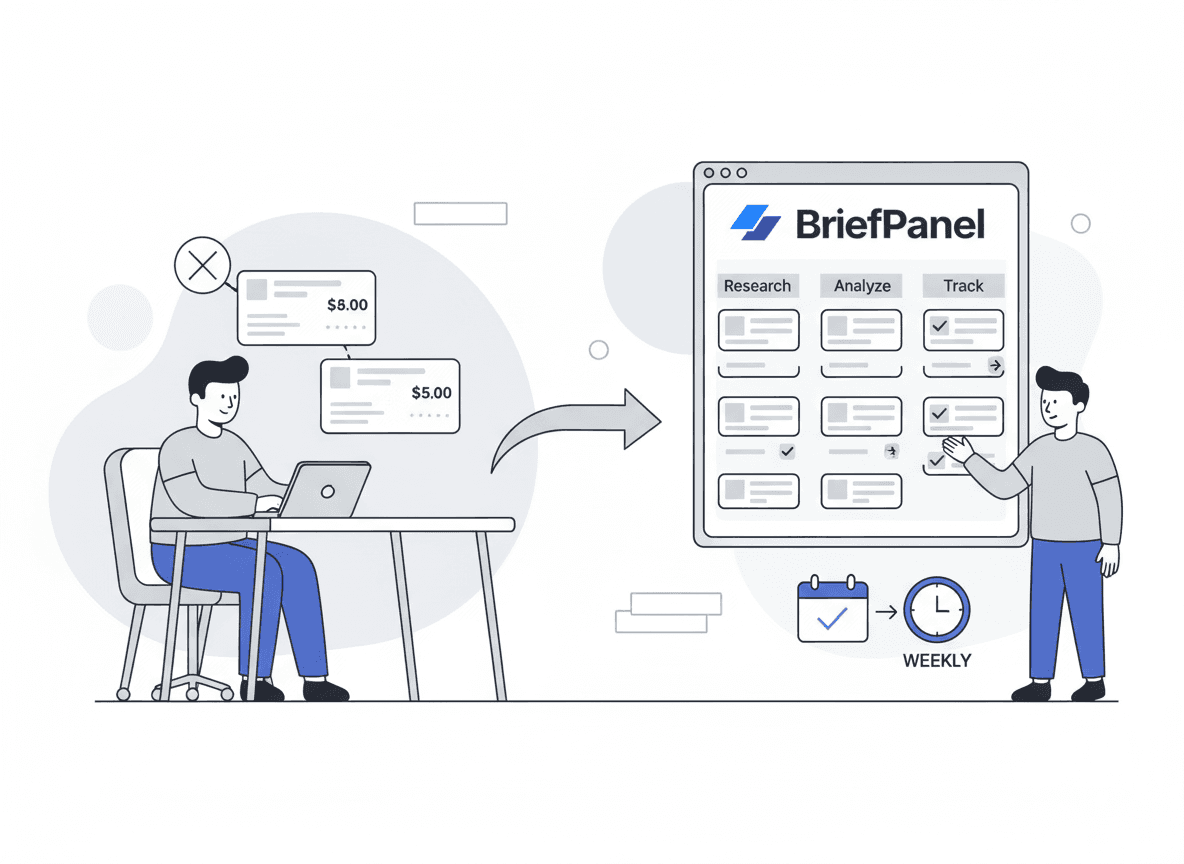
Em vez de enviar diffs brutos, ele gera campos tipados, cada um com o valor anterior e o atual — prontos para ler em segundos e compartilhar com Vendas, Marketing e liderança.
Cada plano, feature ou entrada de changelog de uma página é acompanhado como um item próprio, com histórico próprio: quando apareceu, quando um dos seus campos mudou (com o valor anterior e o atual) e quando foi removido.
Por que o BriefPanel funciona para Product Managers
O BriefPanel combina monitoramento com rastreio no nível do campo.
Principais recursos:
-
Cadência flexível de monitoramento Defina 30 min, 1h, 6h ou diário por URL.
-
Instruções de IA Nomeie os itens e campos que importam na visão de PM, e o que ignorar.
-
Sensibilidade da Atualização Um limite de detecção: baixe a sensibilidade para que edits muito pequenos não contem como atualização.
-
Email, push, Slack e Discord Receba alertas quando algo importante acontecer, por email, push ou um webhook do Slack/Discord no canal do time.
-
Digests diários e semanais Mantenha todos alinhados sem bombardear o time.
-
Alertas multilíngues Útil ao monitorar concorrentes internacionais.
Quer acompanhar concorrentes sem trabalho manual? Veja como times de produto usam o BriefPanel →
Modelos de Instruções de IA (copiar e colar)
Use as Instruções de IA para dizer ao BriefPanel quais itens e campos acompanhar, para cada atualização já chegar pronta para o PM.
Preço e packaging
"Acompanhe cada plano como um item próprio. Para cada plano, guarde o nome, o preço, a unidade de cobrança, os limites de uso, os descontos e os recursos listados na tabela comparativa. Trate um plano novo ou removido, uma mudança de preço ou um limite alterado como uma atualização. Ignore rodapé, navegação e mudanças cosméticas."
Roadmap e posicionamento
"Acompanhe a headline da homepage, o público-alvo e cada claim e diferencial de produto como um item próprio. Trate uma claim nova, reescrita ou removida como uma atualização. Ignore depoimentos, navegação e layout."
Docs e API
"Acompanhe cada entrada do changelog e cada endpoint da API como um item próprio. Para cada um, guarde o título, a data, a versão e se é uma breaking change ou depreciação. Trate uma entrada nova, um parâmetro renomeado ou uma mudança em autenticação ou rate limit como uma atualização. Ignore navegação e correções de digitação."
Setup em 10 minutos para monitoramento competitivo
- Escolha 10–30 URLs em 3–8 concorrentes (preço, docs, changelog, integrações).
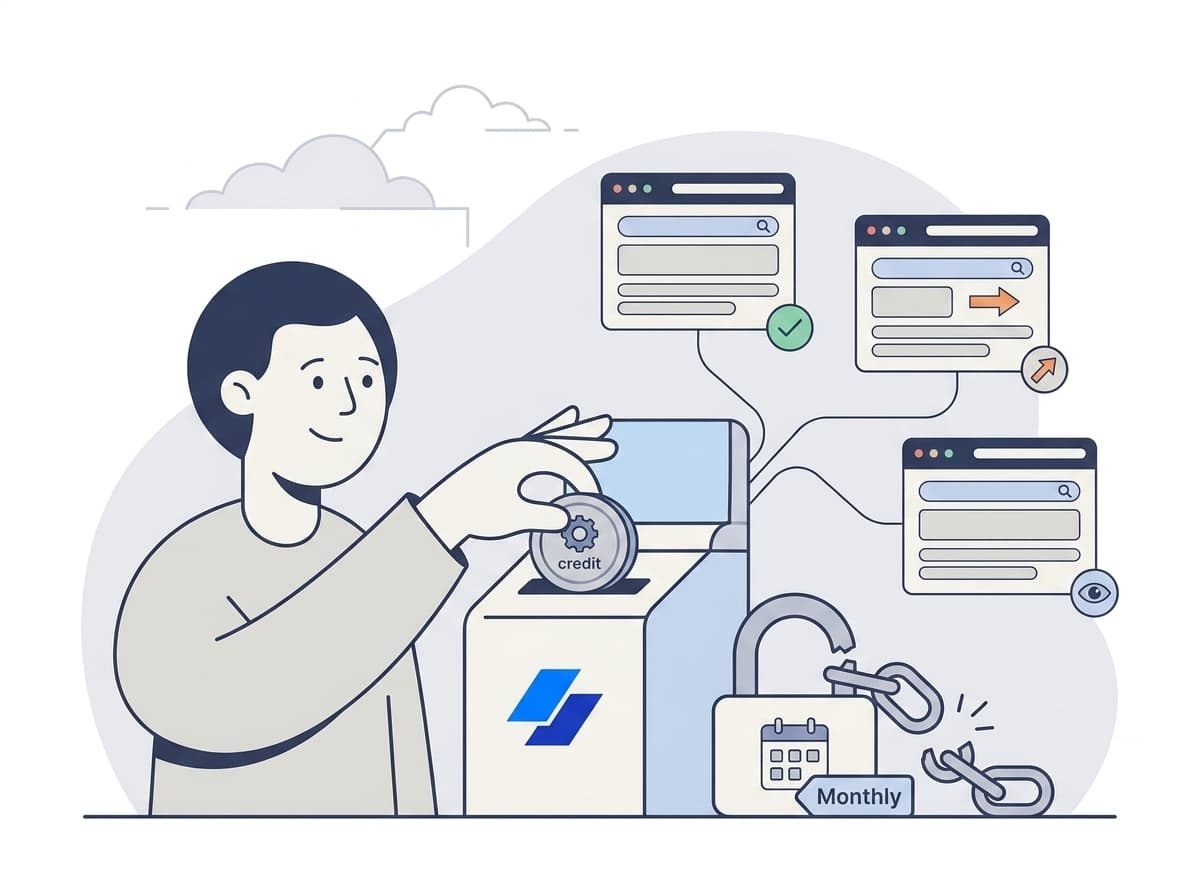
- Defina cadências (preço a cada 6h; docs e termos a cada 24h). Cada verificação gasta um crédito por página lida, então verificar com menos frequência é a principal forma de gastar menos; as configurações da fonte mostram quanto custa uma verificação.
- Adicione Instruções de IA alinhadas com o que seus stakeholders querem.
- Use um digest diário como “feed competitivo”.
- Compartilhe o que importa: mande alertas para o canal do time pelo webhook do Slack/Discord, aperte “Não mostrar atualizações como esta” nas atualizações que ninguém precisa e peça ao Assistente os movimentos de cada concorrente antes do deck semanal.
O resultado: menos surpresas, decisões mais rápidas e menos tempo mantendo documentos desatualizados.
Quando usar o quê (framework rápido)
| Necessidade | Melhor opção | Por quê |
|---|---|---|
| Notícias e menções amplas | Google Alerts / newsletters | Bom sinal de descoberta |
| Acompanhar muitos blogs | RSS | Leitura eficiente |
| Detectar mudanças em páginas | Monitores de mudança | Detecção confiável |
| Detectar e entender impacto rapidamente | BriefPanel | Campos tipados + Instruções de IA + digests |
Comece um hábito de inteligência competitiva
Inteligência competitiva não deveria ser uma correria trimestral.
O BriefPanel ajuda PMs a criar um hábito leve: ver o que mudou, compartilhar o que importa e decidir com mais contexto.
Veja o BriefPanel para inteligência competitiva →