Modern marketing moves fast — and so do your competitors.
A competitor can:
- change their homepage headline
- launch a new landing page
- adjust pricing or packaging
- update case studies and social proof
- shift positioning toward a new segment
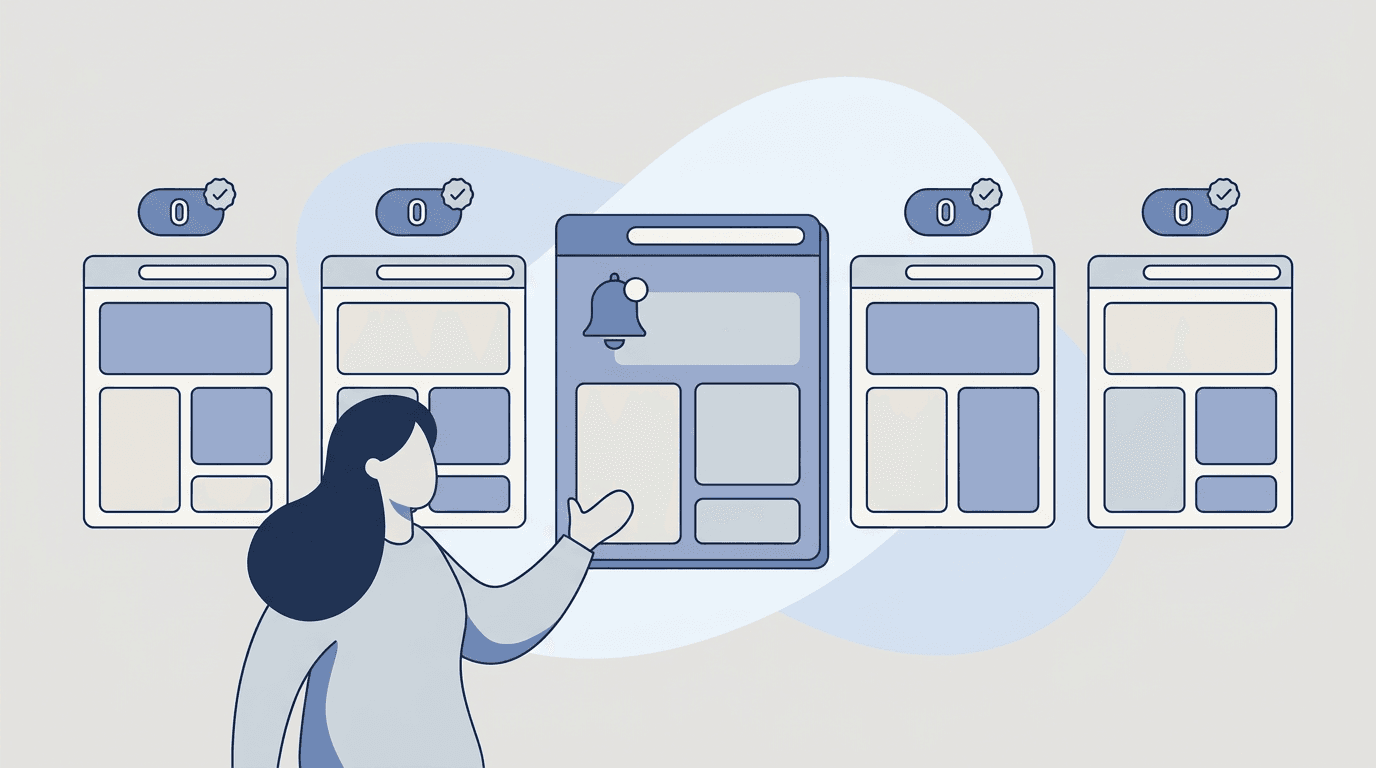
…and by the time you notice, your campaign message may already be behind.
This post compares the most common ways marketers monitor competitor activity, shows what the latest competitive-intelligence research says about why it matters, and lays out a practical framework to turn page changes into clear, shareable updates with BriefPanel.
What the data shows: competitive monitoring is now table stakes
Competitive monitoring used to feel like a "nice to have." The research now says otherwise.
In Crayon's 2024 State of Competitive Intelligence report — a survey of 700+ competitive-intelligence professionals — 94% of companies said their markets have become more competitive over the past year. Competition isn't getting calmer; for almost everyone, it's intensifying.
That pressure shows up directly in revenue. For the average software company, Crayon found that 65% of sales opportunities are competitive — meaning a prospect is actively weighing you against at least one alternative. When two out of three deals are competitive, the messaging your competitors put on their pages is, quite literally, the message your buyers are comparing you to.
This is why competitive intelligence has become a core product-marketing function. The most common CI deliverable is the battlecard: 78% of CI leaders produce battlecards as their primary output, according to Crayon. But the same report surfaces the real bottleneck — 58% of CI professionals say keeping battlecards and content up to date is a constant struggle, and another 58% say gathering competitive intel in a timely manner is a frequent challenge. The hard part isn't deciding to monitor competitors; it's keeping up with them.
AI is now the lever teams reach for to close that gap. Crayon reported a 76% year-over-year jump in AI adoption among compete teams, with 60% now using AI daily. That mirrors the broader marketing shift documented in the Marketing AI Institute's 2025 State of Marketing AI report: AI has moved from experiment to everyday workflow across marketing teams.
And the payoff is measurable on the front line. Klue's customer results show what consistent competitive enablement can do: Domino's increased its competitive win rate by 17 points after standing up a structured compete program, and Blackbaud reported a 28% higher win rate against its top competitors after rolling out AI-assisted competitive insights. The teams winning more deals aren't the ones with the biggest swipe file — they're the ones who notice competitor moves first and translate them into something the rest of the company can act on.
The takeaway for marketers: monitoring competitor pages isn't busywork. It's the raw input for positioning, campaign response, and sales enablement — and the bottleneck is speed and synthesis, not detection.
What marketers should monitor (the pages that signal strategy)
Start with the pages that reveal messaging and conversion intent:
- homepage hero + nav positioning
- pricing and plan comparison pages
- feature pages and solution pages
- campaign landing pages
- case studies / testimonials pages
- docs/knowledge base pages for new feature messaging
- partnership pages and integration directories
Marketing isn't just about "new blog posts." It's about message changes.
A competitive-monitoring framework for marketers (signals + cadence)
The 58% who struggle to keep intel timely usually have the same root problem: they monitor everything at the same frequency, drown in noise, and stop trusting the feed. A better approach is to match the signal to the right cadence, so high-velocity pages get watched closely and slow-moving pages don't generate noise.
Here's a starting framework you can adapt:
| Page / signal | What it tells you | Suggested cadence |
|---|---|---|
| Homepage hero + main nav | Core positioning, primary audience, top value prop | Daily |
| Pricing & packaging pages | Discounting, new tiers, plan repositioning | Daily–hourly |
| Campaign / paid landing pages | Active offers, seasonal pushes, A/B test winners | Hourly–6 hr |
| Feature & solution pages | New capabilities, category language, ICP shifts | Daily |
| Case studies & testimonials | New logos, proof points, target verticals | Every 24 hours |
| Integrations & partnerships | Ecosystem moves, new go-to-market motions | Every 24 hours |
| Docs / changelog / knowledge base | Features shipping before the marketing catches up | Daily |
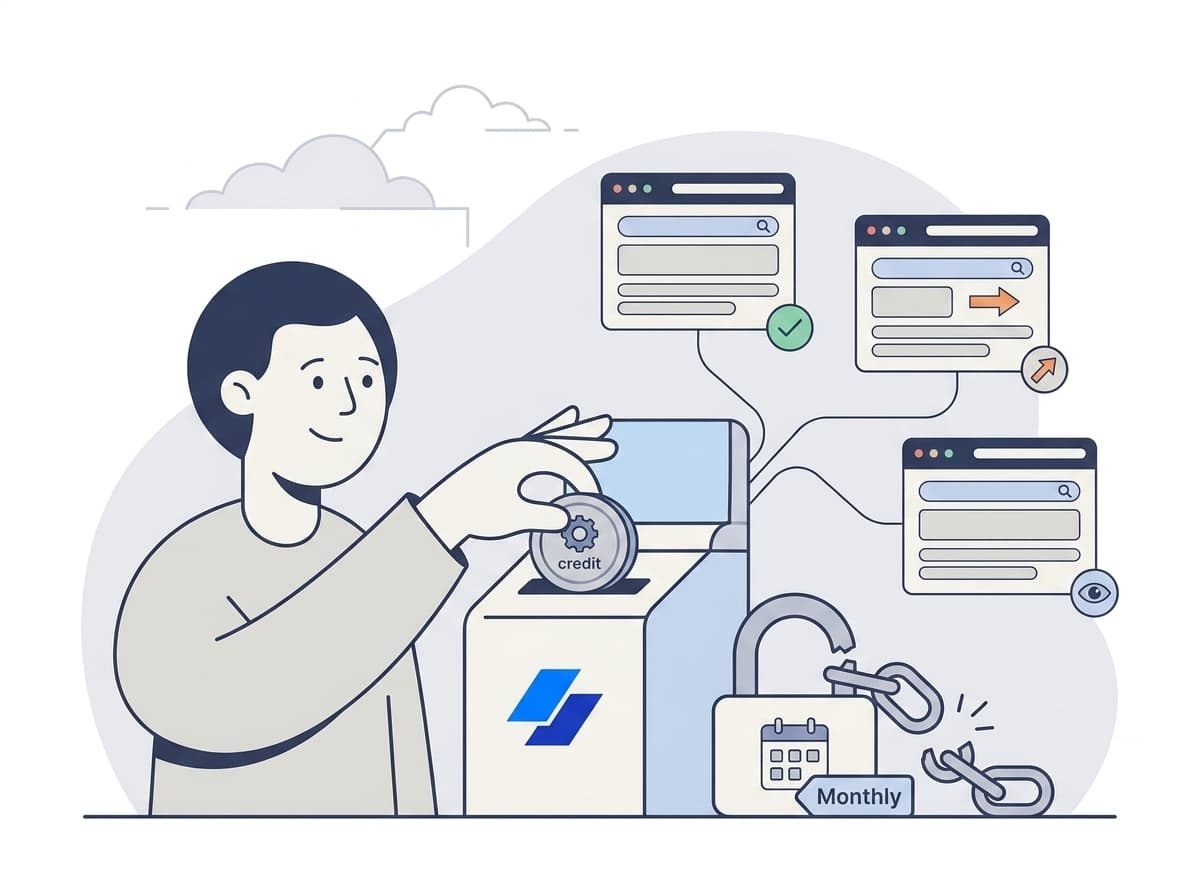
Watch the cost of the tight rows. Each check spends one credit for every page it reads, and an hourly page runs 24 checks a day against one for a daily check. Across 10–40 URLs, keep hourly for the few pricing and campaign pages that move fast and leave the rest daily.
A few principles that make this framework actually work:
- Watch behavior, not just content. A new CTA, a removed guarantee, or a swapped hero image often signals a strategy change before any blog post does.
- Say what to ignore. You want real messaging shifts, not a re-rendered cookie banner.
- Route the output. A change you can't summarize and share is a change that dies in your inbox. The goal is something shareable, not a diff: a post in the team's Slack or Discord channel, a digest, or a CSV for the campaign retro.
Real examples: what competitor changes look like in practice
Messaging shifts (the quiet repositioning)
A competitor swaps their homepage hero from "the easiest tool for small teams" to "the platform for enterprise marketing." That's not a copy tweak — it's a signal they're moving upmarket, likely raising prices and chasing a new ICP. If you catch it the week it happens, you can sharpen your "built for teams who actually want simple" positioning before their new message hardens in buyers' minds.
Campaign & landing-page changes (the offer war)
A rival launches a "/black-friday-2026" landing page with a 40% discount and limited-time urgency. Detecting it early lets demand-gen decide — within hours, not after the campaign ends — whether to match, counter-position on value, or hold. Because campaign pages move fast, this is exactly the signal that benefits from a tight (hourly–6 hr) cadence.
Pricing & packaging edits
A competitor quietly introduces a cheaper entry tier or removes a usage cap. These edits rarely get a press release — they just appear on the pricing page. For a deeper playbook on this specific signal, see our guides on tracking competitor pricing and monitoring competitor pricing and packaging.
SEO & content moves
A competitor publishes a cluster of pages around a new keyword theme, or rewrites a comparison page to target your brand. SEO platforms will tell you rankings shifted; what you often actually need is what changed on the page so you can respond with better content or counter-messaging.
The most common solutions (and their tradeoffs)
1) Manual checks + swipe files
Pros:
- simple
- good qualitative intuition
Cons:
- doesn't scale
- easy to miss subtle edits
- no consistent history
2) Google Alerts (good for mentions, weak for campaign changes)
Pros:
- catches new articles/pages indexed by Google
- helpful for brand mentions
Cons:
- doesn't reliably watch a specific URL and highlight edits
- often too slow for campaign iteration
- noisy for broad topics
3) SEO/competitive platforms (strong for search data, not page-level diffs)
SEO tools are great for:
- keyword visibility
- backlink tracking
- domain-level competitive comparisons
But they're usually not the best fit for:
- page-level copy changes
- new CTAs and conversion tweaks
- pricing/packaging edits
Marketers often need what changed on the page, not just the ranking graph.
4) Website change monitoring tools (detection without interpretation)
Change detection tools are excellent at:
- noticing that a page changed
But after detection, you still need to:
- open the diff
- interpret what matters
- write an internal update
- align stakeholders
That's the expensive part — and it's exactly the synthesis bottleneck the CI research keeps surfacing. (For a broader landscape, see the top 10 ways to track website changes.)
BriefPanel: change monitoring that outputs typed fields
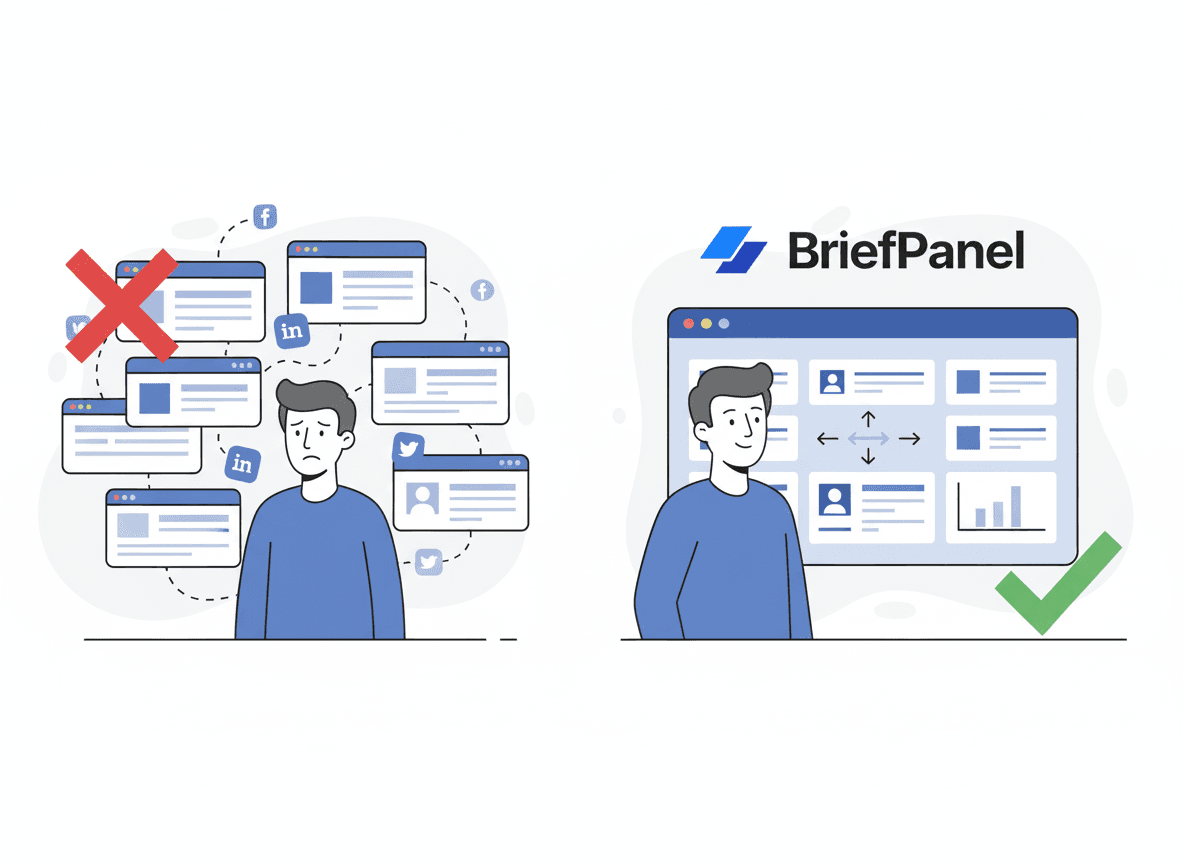
BriefPanel turns page changes into typed fields — price, title, and any field you name — each with its previous and current value, so your team can understand competitor moves quickly and act.
Instead of spending time parsing diffs, you get the field that moved and both of its values, ready to paste into:
- weekly growth updates
- campaign retros
- stakeholder emails
- battlecards
Why BriefPanel works for marketers
BriefPanel combines monitoring with field-level tracking.
Key capabilities:
-
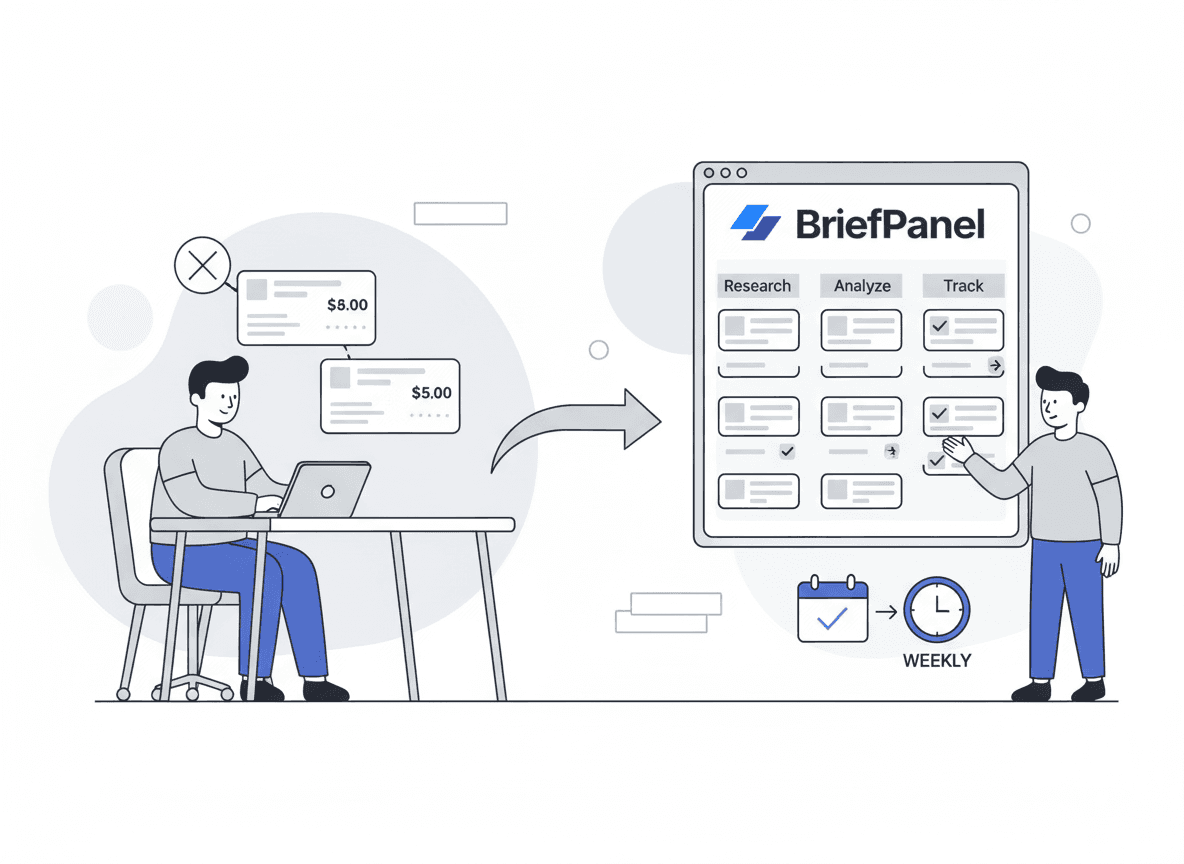
Flexible monitoring cadence Check each URL every 30 minutes, every hour, every 6 hours, or every 24 hours — so you can match cadence to signal the way the framework above describes.
-
AI Instructions Tell each source what to track and what to ignore (CTAs, offers, social proof, positioning claims; not layout).
-
Update Sensitivity A detection threshold: lower it so very small edits don't count as updates.
-
"Don't show updates like this" On any update you don't need, teach that source to skip similar ones. They stay in the history but stop notifying you.
-
Email, push, Slack and Discord Get alerted when important changes happen, by email, push, or a Slack/Discord webhook into your team's channel.
-
Daily & weekly digests Share a digest with your team without creating another meeting.
-
Assistant Ask questions like "What did our competitors change on their pricing pages this month?" and get answers that cite the tracked items, with a bar chart of updates per source or a line chart of one field's history.
-
CSV export Export a source's current items as CSV for a battlecard, a campaign retro, or a spreadsheet.
-
Multilingual alerts Useful when you monitor international competitors.
Watching competitors? See how teams use BriefPanel for competitor intelligence →
Copy/paste AI Instructions for marketing teams
Positioning
"Track the headline, the subheadline, the target audience, and each differentiator claim as its own item. Treat a new, reworded, or removed claim as an update. Ignore navigation, footer, and layout changes."
Offers and CTAs
"Track each offer and each CTA as its own item. For each offer, keep the discount, the deadline, the price, the trial terms, and any guarantee or cancellation terms. Treat a new or removed offer, a changed discount, or reworded CTA text as an update. Ignore images and layout."
Social proof
"Track each case study, customer logo, testimonial, and trust badge as its own item. For each case study, keep the customer, industry, and headline metric. Treat a new or removed item as an update. Ignore carousel order and layout."
A 10-minute competitive monitoring workflow for marketers
- Pick 5–15 competitors (or adjacent brands) worth tracking.
- Add 10–40 URLs: homepage, pricing, key landing pages, case studies, integrations.
- Set cadences (campaign pages more frequent; case studies every 24 hours) using the framework above. Checking less often is the main way to spend fewer credits, and a source's settings show what one check costs.
- Add AI Instructions tuned to your goals (conversion, positioning, proof).
- Share a weekly digest that highlights the most meaningful moves — and keeps your battlecards current without the 58%-of-teams scramble.
When to use what (decision framework)
| Your need | Best tool | Why |
|---|---|---|
| Brand mentions and news | Google Alerts | Useful discovery |
| SEO performance tracking | SEO platforms | Search visibility data |
| Detect page changes | Website change monitors | Reliable detection |
| Detect changes + get the field that moved | BriefPanel | Typed fields + AI Instructions + digests |
FAQ
How often should marketers check competitors?
Match cadence to signal. Pricing and active campaign pages can change daily or even hourly, so watch them closely; case studies, integrations, and partnership pages move slowly and are fine on a 24-hour check. With 65% of software deals competitive (Crayon, 2024), high-intent pages deserve the tightest schedule.
What competitor pages matter most for positioning?
The homepage hero, pricing/packaging, and core feature/solution pages. These are where a competitor declares who they're for and what they claim — the exact inputs you need to refine positioning and keep battlecards accurate.
Isn't a website change monitor enough?
Detection is the easy 20%. The CI research is blunt about the hard part: 58% of teams struggle to keep competitive content current and synthesized. A raw diff still needs someone to interpret and write it up — which is the work BriefPanel cuts down by naming the field that moved, with its previous and current value, so there is no diff left to read.
How does AI help with competitive monitoring?
AI compresses the synthesis step — reading the diff, judging what matters, and drafting the summary. That's why compete teams' AI usage jumped 76% year over year, with 60% using it daily (Crayon, 2024). BriefPanel applies that to page changes with AI Instructions: you name what matters, and it tracks each plan, offer, or claim on the page as its own item — new, changed or gone — with the field that moved and both values on a change.
Can BriefPanel monitor competitors in other languages?
Yes. BriefPanel reads pages in any language and can write your alerts in your preferred language, which is useful when you track international competitors or localized landing pages.
Start monitoring competitor campaigns the smart way
Marketing is faster when you see moves early — and when you can explain them quickly.
The research is consistent: markets are getting more competitive, most deals are contested, and the bottleneck isn't detecting changes — it's synthesizing them fast enough to act. BriefPanel turns competitor page changes into typed fields — price, title, and any field you name, each with both values — your team can act on.
See how teams use BriefPanel for competitor intelligence →
Related guides
- How to track competitor pricing
- Top 10 ways to track website changes
- Monitor competitor pricing and packaging
- Competitive intelligence for product managers
Sources
- Crayon — The State of Competitive Intelligence in 2024: CI Meets AI (survey of 700+ CI professionals)
- Marketing AI Institute — 2025 State of Marketing AI Report
- Klue — Customer success stories and competitive win-rate results