Analysts are paid for judgment — not for refreshing tabs.
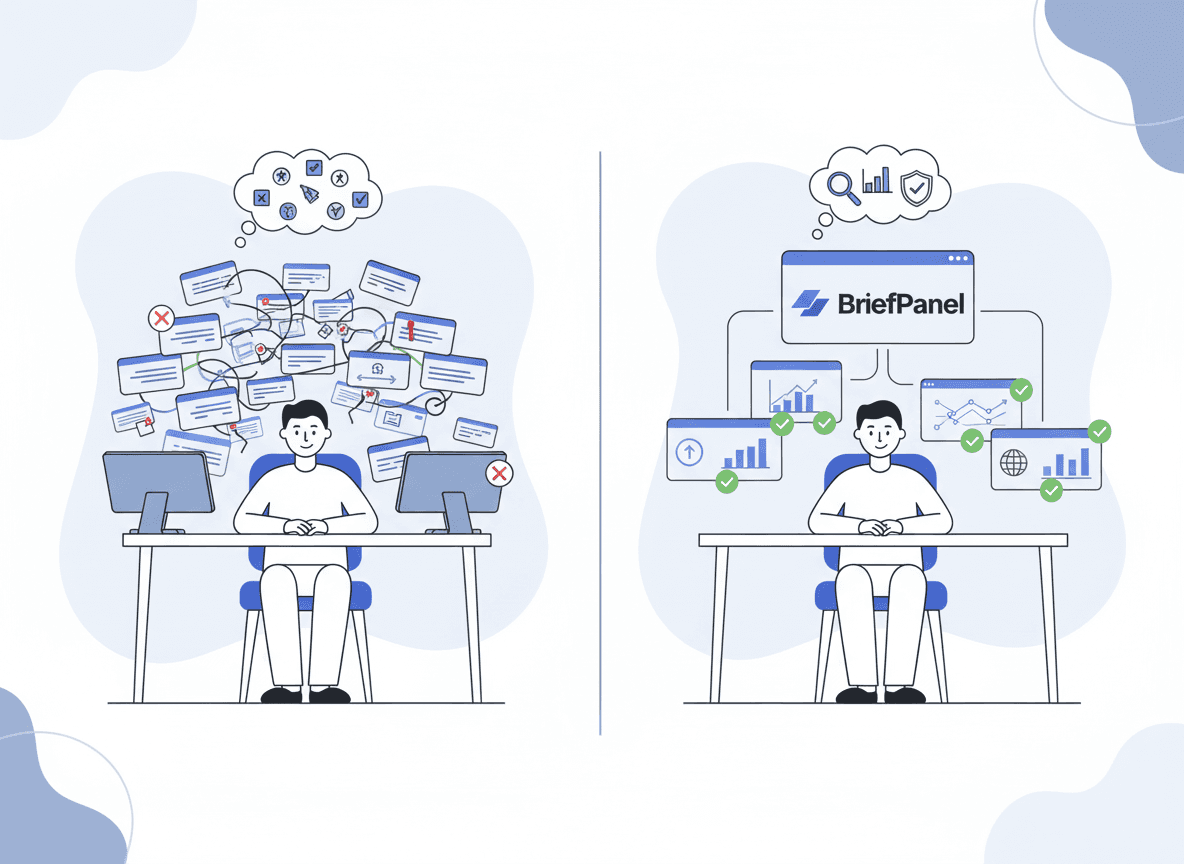
Yet many market intelligence workflows still look like this:
- dozens of bookmarked sources
- fragmented newsletters
- alerts that don’t explain what changed
- constant context switching
The result is predictable: missed signals, delayed analysis, and recurring “did this page change?” uncertainty.
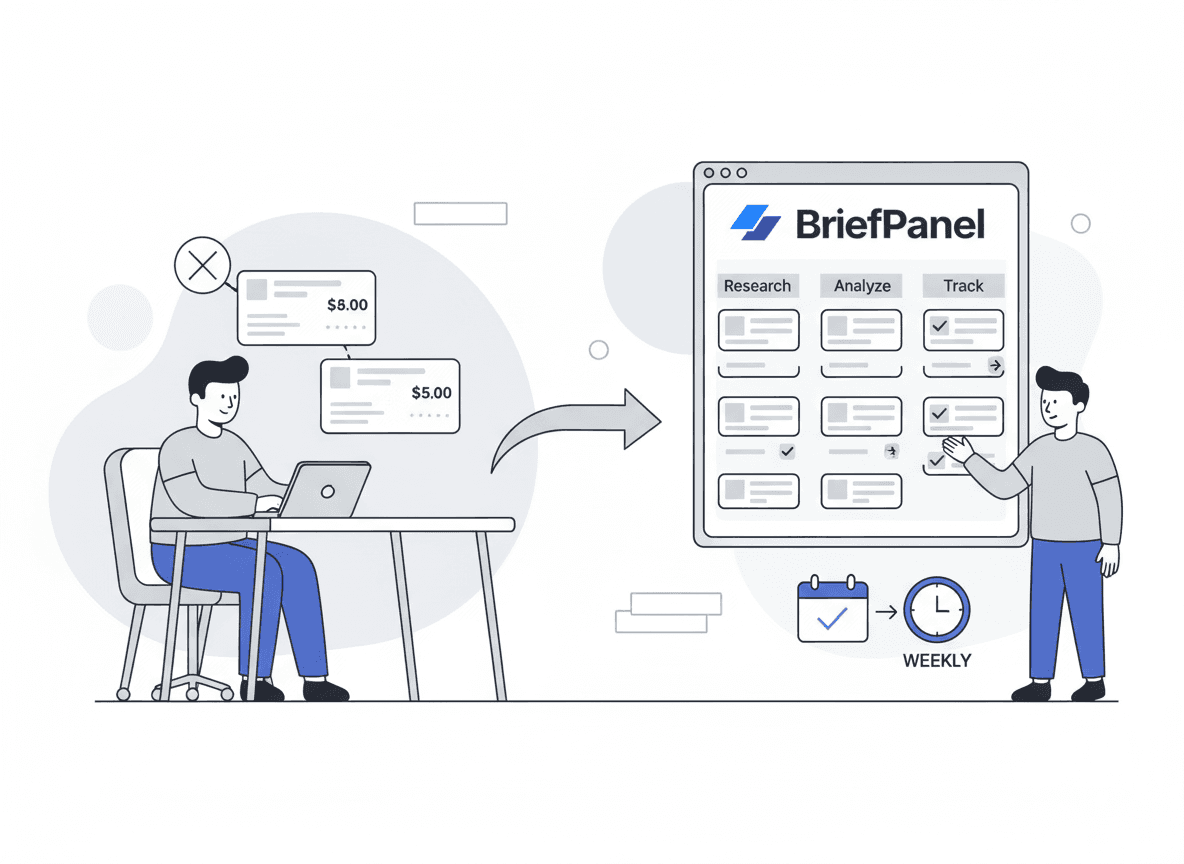
This guide looks at what recent research says about how analysts spend their time, lays out a tiered monitoring framework (source tiers + cadence) built around primary sources, and ends with a repeatable workflow for turning high-signal page changes into typed fields, each with its previous and current value, with BriefPanel.
What the data shows: analysts are drowning in inputs, not insight
The market-intelligence problem is not a shortage of data — it’s a flood of it, and most of an analyst’s day goes to assembling inputs rather than interpreting them.
A few recent, citable data points frame the moment:
-
The market for these tools is expanding fast. The market-intelligence software market was valued at roughly USD 12.4 billion in 2025 and is projected to reach about USD 29 billion by 2033, a CAGR of roughly 11.2% (Market.us / Market Mind Partners). More tools means more dashboards, alerts, and feeds competing for attention.
-
Alternative and primary-source data has gone mainstream. The global alternative-data market was estimated at about USD 11.65 billion in 2024 and is forecast to reach roughly USD 135.7 billion by 2030, a CAGR of about 63.4% (Grand View Research). Web-sourced signals — pricing pages, filings, releases — are now a routine input, not an edge.
-
Adoption among investment professionals is near-universal. In Lowenstein Sandler’s 2025 Alternative Data Report, 90% of respondents said they currently use alternative data, up from 67% the prior year and 62% in 2023, and 100% reported moderate or large-scale use of AI for investment research, with roughly two-thirds of advisers spending over USD 1 million a year on data (Lowenstein Sandler).
-
Budgets keep climbing. In the same Lowenstein survey, 89% of firms planned to increase their alternative-data budgets and 96% planned to increase AI budgets in 2026, and the report cites intelligence firm Neudata’s estimate that the alternative-data market for investment managers could reach nearly USD 40 billion by 2030 — roughly double its current size (Lowenstein Sandler).
-
But analysts haven’t yet wired AI into the research itself. CFA Institute’s 2024 member survey of 200 investment professionals found that only 16% of respondents were using generative AI in industry and company analysis workflows, and 85% of employers saw a need for industry-wide standards while 82% said they were holding back from the technology until those standards exist (CFA Institute).
-
And the manual gathering tax is still real. Alteryx’s 2025 State of the Data Analyst report — a survey of 1,400 analysts conducted by Coleman Parkes in late 2024 — found the typical analyst still spends 10–11 hours per week collecting and preparing data, with 45% spending over six hours a week on basic data cleansing and 76% still relying on spreadsheets for prep work (Alteryx). That is roughly a quarter of a working week spent assembling inputs rather than interpreting them.
The takeaway: more sources and more budget have not removed the manual work of watching the right pages and figuring out what changed. That gap — between abundant data and scarce attention — is exactly where a disciplined monitoring workflow pays off.
What analysts should monitor (the sources of market truth)
The highest-signal updates often come from a small set of pages that change quietly:
- competitor pricing and packaging
- product release notes and documentation
- investor relations pages and announcements
- regulatory guidance and enforcement pages
- standards bodies and policy updates
- vendor terms/limits pages
- incident pages for operational risk signals
Market intel gets better when you monitor specific sources of truth, not just broad news.
Named primary sources worth monitoring directly
You don’t need a paid terminal to watch most of the highest-signal public sources. Several are free, structured, and update in near real time:
- Company investor-relations (IR) pages — press releases, 8-K-equivalent announcements, guidance updates, and event calendars usually post here first.
- SEC EDGAR full-text search — covers the full text of all electronically submitted filings since 2001, including exhibits, and new filings typically become searchable in under a minute of being published (EDGAR Full-Text Search FAQ). It’s the canonical U.S. source for 10-Ks, 10-Qs, 8-Ks, and proxy statements.
- The Federal Register — the daily journal of U.S. rules, proposed rules, and notices, with a public API that requires no authentication, so you can track new regulatory activity by agency or keyword.
- Regulator and standards-body pages — enforcement actions, guidance, and policy updates from the relevant agencies for your sector.
- Product release notes, documentation, status/incident pages, and terms/limits pages — where competitive and operational-risk signals surface before they hit the news.
Primary sources are the right foundation precisely because they’re where narratives start, before newsletters and analysts repackage them.
A tiered monitoring framework: source tiers + cadence
The fastest way to cut overload is to stop treating every source as equally urgent. Sort your coverage universe into three tiers, then assign a checking cadence to each. The goal is simple: never miss a Tier 1 change, and never get paged for a Tier 3 one.
Tier 1 — Decision-grade sources (every 30 minutes or hourly)
These are pages where a change can move a thesis, a forecast, or a recommendation within the same day.
- Competitor pricing and packaging pages
- Investor-relations newsrooms and guidance/event pages
- New SEC EDGAR filings for your coverage tickers (8-Ks, earnings, material agreements)
- Regulatory enforcement or rule pages that bind your sector
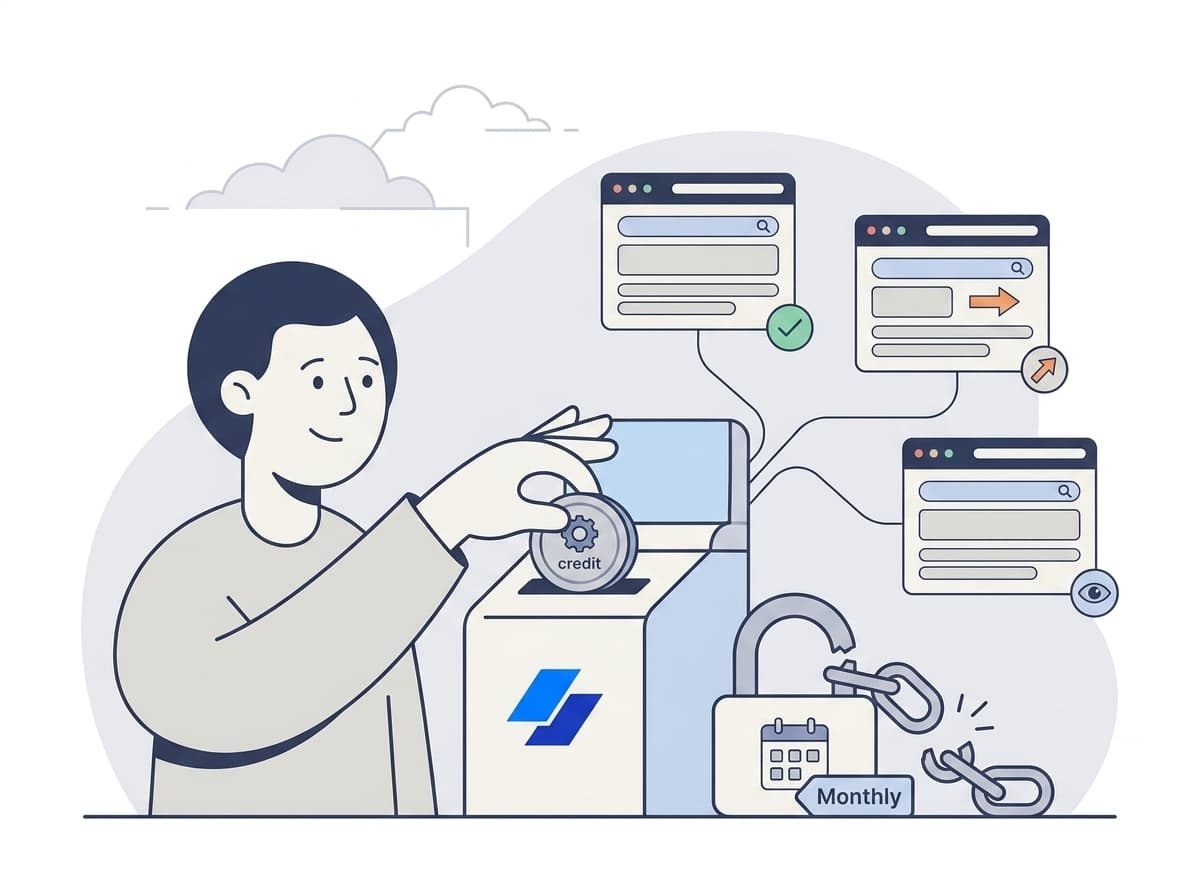
Cadence: a check every 30 minutes or every hour, with push/email alerts on. EDGAR makes this realistic — new filings are full-text searchable in under 60 seconds of publication, so a same-hour signal is achievable without a terminal. Keep this tier small: each check spends one credit for every page it reads, and a page checked every 30 minutes runs 48 checks a day against one for a daily check. A source's settings show what one of its checks costs.
Tier 2 — Context sources (daily)
These shape the narrative but rarely demand a same-hour reaction.
- Product release notes, documentation, and changelogs
- Federal Register notices and proposed rules for your agencies (track these via its free, no-auth public API)
- Standards-body and policy pages
- Vendor terms / limits pages
Cadence: daily check, rolled into a single morning digest rather than individual alerts.
Tier 3 — Ambient sources (daily check, weekly read)
Slow-moving pages worth watching for drift, not urgency.
- Corporate “about/leadership” and careers pages (hiring surges, reorganizations)
- Long-lived policy, methodology, or roadmap pages
- Secondary competitors outside your core watchlist
Cadence: a check every 24 hours, the longest interval BriefPanel offers. These pages rarely change, so read them in a weekly digest instead of as alerts. Review the whole tier monthly and promote/demote sources as your coverage shifts.
This structure maps cleanly onto per-URL scheduling: each source gets the cadence its tier deserves, so attention flows to changes that actually matter.
The common solutions (and why they’re incomplete)
1) Newsletters and RSS
Pros:
- great discovery
- good for broad narratives
Cons:
- noisy
- inconsistent coverage
- weak for tracking edits to existing pages
2) Google Alerts
Pros:
- easy to set up
- works for broad mentions
Cons:
- not designed for page-level change tracking
- can be delayed
- doesn’t summarize what changed on the page
3) Research terminals and data platforms
These can be essential for:
- structured financial data
- analyst reports
- large-scale coverage
But many analysts still need something lightweight for:
- tracking a set of public web pages that drive narratives and risk
- summarizing changes for teams
- keeping an audit trail of what changed and when
4) Website change monitoring tools
These tools can reliably detect changes to a URL.
But they usually stop at “something changed,” leaving you to:
- parse diffs
- interpret relevance
- craft internal updates
That’s time you should be spending on analysis.
BriefPanel: market intelligence as typed fields
BriefPanel turns website changes into typed fields, each with its previous and current value.
Instead of scanning raw diffs, you get:
- the field that moved, and from what to what
- how important the change is
- a link back to the source
This makes it easy to build a repeatable “market signals” habit without overwhelm.
Why BriefPanel fits analysts
BriefPanel combines monitoring with field-level tracking so you can focus on higher-value work.
Key capabilities:
-
Flexible monitoring cadence Assign 30 min, hourly, 6 hr, or daily schedules per URL.
-
AI Instructions Tell each source what to track and what to ignore: the items and fields that count as a “signal” for your domain (pricing, risk language, deadlines, numerical changes).
-
Update Sensitivity A detection threshold: lower it so very small edits don't count as updates.
-
“Don't show updates like this” On any update you don't need, teach that source to skip similar ones. They stay in the history but stop notifying you.
-
Email, push, Slack and Discord Get alerts when critical updates land, by email, push, or a Slack/Discord webhook into your team's channel.
-
Daily & weekly digests Build a lightweight digest cadence for stakeholders.
-
Assistant Ask questions across all your sources and get answers that cite the tracked items, a bar chart of updates per source, or a line chart of one field's history.
-
CSV export Export a source's current items as CSV for your model or spreadsheet.
-
Multilingual alerts Helpful for global monitoring and cross-market coverage.
Watching competitors and markets? See how teams use BriefPanel for competitor intelligence →
AI Instructions templates for analysts
When you add a page, tell BriefPanel which items and fields to track and what to ignore.
Competitive movement
"Track each plan and each product capability as its own item. For each plan, keep the name, price, billing unit, seat or usage limits, and the features it includes. Treat a new or removed plan, a price change, or a moved limit as an update. Ignore layout, testimonials, navigation, and cosmetic copy edits."
Regulatory change
"Track each guidance document, enforcement action, and rule as its own item. For each one, keep the title, date, compliance deadline, and any numerical threshold. Treat a new item, a changed deadline, or a changed threshold as an update. Ignore navigation, footers, and formatting."
Risk signals
"Track each incident, security advisory, limit, and policy section as its own item. For each one, keep the status, the affected product, the limit value, and the effective date. Treat a new incident, a status change, or a changed limit as an update. Ignore marketing copy and layout."
A 10-minute market intelligence setup
- Choose 20–50 URLs that define your coverage universe.
- Group by urgency and set cadences (every 30 minutes or hourly for the few critical pages; every 24 hours for the rest, slow-moving pages included). Checking less often is the main way to spend fewer credits.
- Add AI Instructions aligned to the decisions you support.
- Use digests as your recurring stakeholder briefing.
- Review monthly: remove noisy sources, add new “truth pages.”
When to use what (decision framework)
| Your need | Best tool | Why |
|---|---|---|
| Broad news discovery | RSS/newsletters | Fast scanning |
| Brand mentions | Google Alerts | Useful signal |
| Structured financial data | Data platforms | Deep coverage |
| Track page changes and quickly understand impact | BriefPanel | Typed fields + AI Instructions + digests |
What it looks like in practice
A few concrete monitoring plays that fit the tiered framework above:
-
The quiet pricing change. A competitor edits one line on a pricing page — a new tier, a removed “unlimited,” a higher per-seat rate. There’s no press release. A Tier 1 hourly check with competitive-movement instructions surfaces it as typed fields (“Enterprise tier added; Pro seat price $40 → $45”) the same morning, before it shows up in any newsletter. See Monitor Competitor Pricing & Packaging for the deeper playbook.
-
The 8-K before the headline. EDGAR indexes a new 8-K for a coverage name in under a minute. With that company's EDGAR filings list added as a source, the 8-K arrives as a new item — form type, filing date, the events it reports — while sell-side desks are still reading the exhibit.
-
The guidance footnote. An IR “events & presentations” page swaps in an updated outlook slide. AI Instructions that name the outlook figures as the fields to track catch the changed range and ignore the cosmetic reformatting around it.
-
The regulatory drift. A Federal Register notice opens a comment period on a rule that touches your sector. A daily Tier 2 digest flags it without interrupting your morning.
The common thread: the detection is automated and the output is already the field that moved, so your time goes to the judgment call, not the diff.
FAQ
How many sources should an analyst monitor? Most analysts can cover a sector well with 20–50 URLs sorted into the three tiers above. The constraint isn’t how many pages you can watch — it’s how many changes you can meaningfully interpret. Tiering keeps the urgent set small (typically 5–15 Tier 1 pages) so alerts stay trustworthy.
Do I need a Bloomberg or FactSet terminal to do this? No. Terminals are essential for structured financial data and deep historical coverage, but most of the highest-signal public sources are free and structured: SEC EDGAR full-text search covers all electronic filings since 2001, and the Federal Register API needs no authentication. The gap a terminal doesn’t fill is lightweight, prompt-driven change tracking on arbitrary web pages.
Why not just use Google Alerts? Google Alerts is built for new mentions across the web, not for edits to a specific page you already know matters. It won’t reliably tell you that a competitor changed two words on a pricing page, and it doesn’t summarize what changed. For page-level monitoring you want a change-tracking tool — see Top 10 Ways to Track Website Changes.
How do I avoid alert fatigue? Three levers: (1) tier your sources so only decision-grade pages alert you right away; (2) use AI Instructions to name what to track and what to ignore, and press “Don't show updates like this” on updates you don't need; (3) route Tier 2/3 into daily and weekly digests instead of individual notifications. The research is blunt on the cost of getting this wrong — analysts already lose roughly a quarter of their week to gathering and prep (Alteryx), so every redundant alert compounds.
Can this work across markets and languages? Yes — BriefPanel reads pages in any language and can write your alerts in your preferred language, which helps when your coverage universe spans IR pages, regulators, and releases in different markets.
Get market changes you can trust
The best market intelligence systems are calm, repeatable, and grounded in reliable sources.
BriefPanel helps you monitor the pages that matter and turns updates into typed fields you can share, each with its previous and current value.
See how teams use BriefPanel for competitor intelligence →
Related guides
- Competitor Pricing Monitoring
- Top 10 Ways to Track Website Changes
- Monitor Competitor Pricing & Packaging
- Competitive Intelligence for Product Managers
Sources
- Market.us / Market Mind Partners — Market Intelligence Software Market (USD 12.4B in 2025 → ~USD 29B by 2033, ~11.2% CAGR): https://marketmindpartners.com/market-intelligence-software-market-243
- Grand View Research — Alternative Data Market (USD 11.65B in 2024 → USD 135.72B by 2030, 63.4% CAGR): https://www.grandviewresearch.com/industry-analysis/alternative-data-market
- Lowenstein Sandler — 2025 Alternative Data Report (90% use alt-data; 100% moderate/large-scale AI use; budget growth): https://www.lowenstein.com/news-insights/firm-news/lowenstein-releases-2025-alternative-data-report-highlighting-rapid-ai-integration-rising-budgets-and-evolving-governance-demands
- CFA Institute — 2024 AI in Investment Sector Survey (16% use GenAI in industry/company analysis; 85% want standards; 82% holding back): https://www.cfainstitute.org/about/press-room/2024/ai-in-investment-sector-survey
- Alteryx — 2025 State of the Data Analyst (1,400 analysts; 10–11 hrs/week on data prep; 76% rely on spreadsheets): https://www.alteryx.com/about-us/newsroom/press-release/new-research-reveals-that-ai-brings-productivity-gains-but-reliance-on-spreadsheets-puts-data-quality-at-risk
- SEC EDGAR Full-Text Search FAQ (coverage since 2001; new filings searchable in under 60 seconds): https://www.sec.gov/edgar/search/efts-faq.html
- Federal Register Developer API (free, no authentication): https://www.federalregister.gov/developers/documentation/api/v1